

Rupture and Repair


Infants are born with the ability to experience emotions. Their emotions are generated by the way their mother interacts with them - her tone of voice, facial expression, eye contact, physical touch, and body language.1 From birth, children need help to manage their emotions, thoughts and behaviour (self-regulation). They do not have the language to describe or even be aware of their internal world. The presence of a calm, consistent, nurturing caregiver helps them learn to self-regulate. Over time, with the support of parents, children should ideally learn to identify and process their internal sensation and emotions in a healthy way.
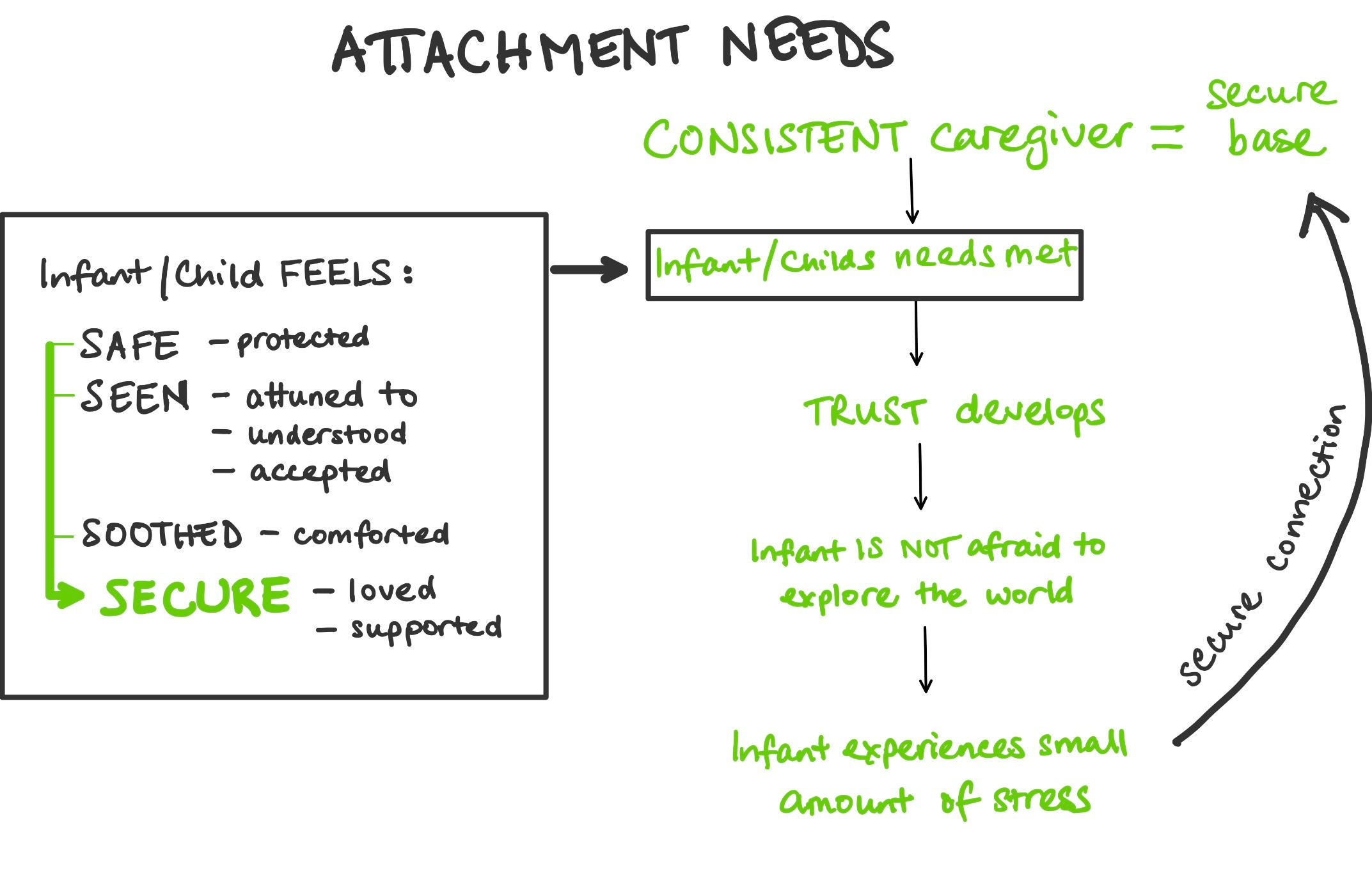
In my last three posts, I wrote about a child’s need to feel safe, seen and soothed. When these needs are met enough, a secure bond or connection between child and caregiver is formed (a secure attachment).
It isn’t possible for any parent to be attuned to their child all the time. Misattunement is a rupture in emotional connection, which creates internal distress for the child. This is a normal and necessary part of healthy development. But if a child is left consistently alone to deal with their internal distress, this leads to chaos and pain. Because children need help from their parents to feel safe, seen and soothed, what is of utmost importance is how their parents respond to ruptures.
In my childhood there was a distinct lack of repair after ruptures. My parents weren’t aware that they caused hurt whenever they dismissed or neglected my feelings or needs. So they weren’t able to acknowledge ruptures they caused, and subsequently weren’t able to repair them. Each time there was a rupture, the connection between me and my parents was broken. The break in connection became wider with each rupture, eventually becoming a deep and wide chasm between us. When there is no repair, family members become distant. There is no sense of emotional safety, no vulnerability, no trust and therefore no emotional closeness. I subconsciously buried feelings of pain and abandonment, as well as a sense of feeling responsible whenever there was a rupture. I desperately needed my parents to repair those ruptures to help me feel securely attached to them. But because they didn’t, the end result for me was attachment trauma.
What builds emotional security is a parent’s determination to repair ruptures soon after they have occurred. In general, the more emotional stress caused by unrepaired ruptures in connection, the more anxiety, depression, and low confidence the adult that infant grows into will suffer.2
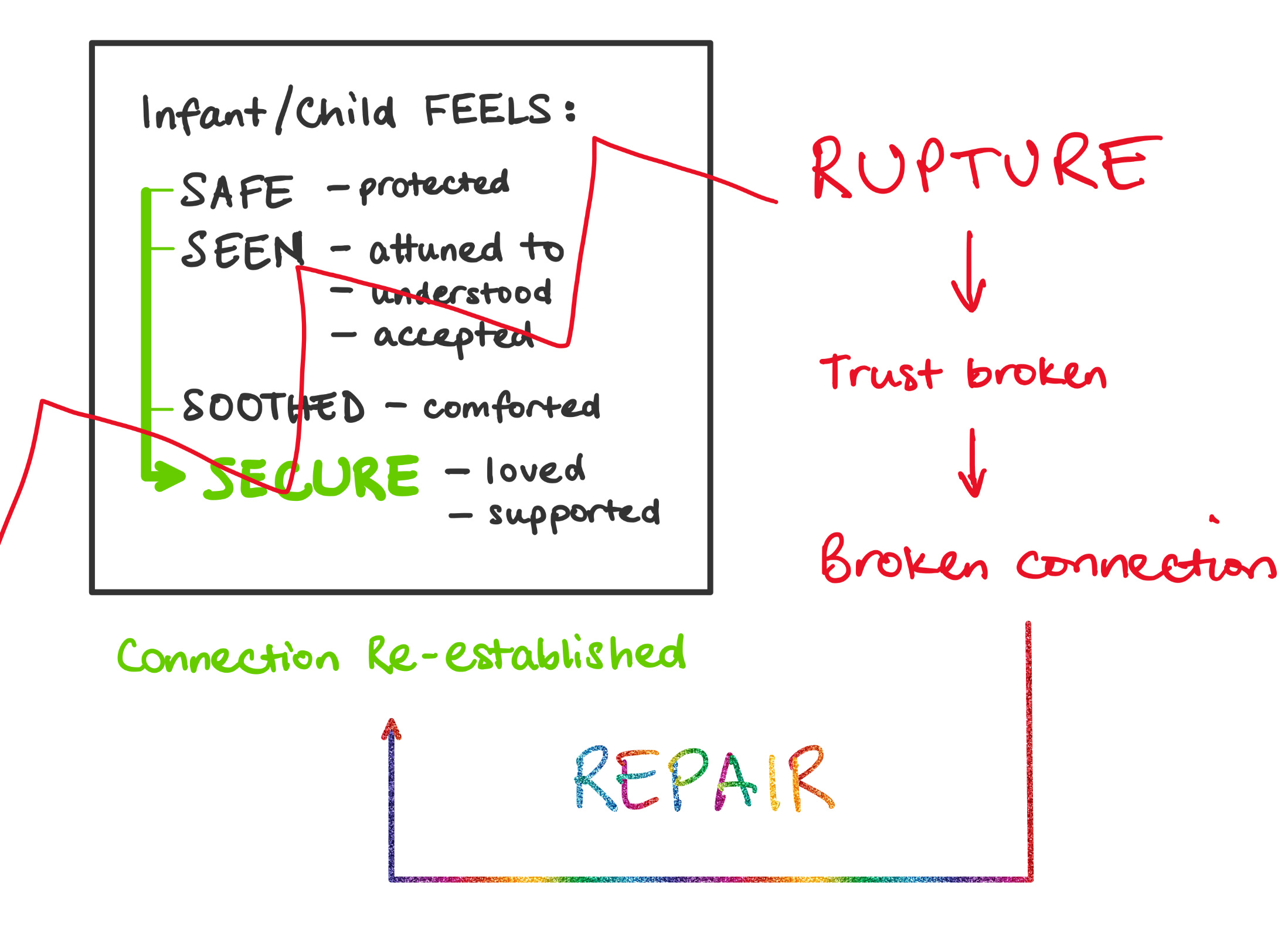
We learn how to repair broken connections with others through our parents. Our parents were meant to model how to do this by taking responsibility, acknowledging their mistakes and repairing connection. If they did this, we would be more aware of the times we create a rupture with our children and others, more likely to take responsibility, and more equipped to repair those broken connections.
Rupture without repair and the resulting disconnect between child and parent gives us a glimpse into the deep rupture between us and God. But unlike our parents, God is righteous, good and perfect and has not wronged us. Instead, it is our own sin that has ruptured our relationship with God, and he holds us accountable. What amazing love it is, then, that God should be the one to initiate a plan to repair our broken connection with him.
For God so loved the world that he gave his one and only Son, that whoever believes in him shall not perish but have eternal life. For God did not send his Son into the world to condemn the world, but to save the world through him.
John 3:16-17
All he asks of us is this:
to become aware of the ways we have ignored and turned away from him
to acknowledge that we have sinned against him, and ask for his forgiveness
to turn away from our sin, following him as Lord
to believe in his Son Jesus and trust that he was punished for our sin
This in turn points us towards repairing broken connections with those around us - growing in awareness of how we have hurt others, acknowledging the hurt we have caused and seeking forgiveness and repair.
We implore you on Christ’s behalf: Be reconciled to God. God made him who had no sin to be sin for us, so that in him we might become the righteousness of God.
2 Corinthians 5:20b-21
Even if our parents failed to repair ruptures with us, God has paved the way for us to repair our broken connection him - rescue and reconciliation through Jesus. And that is just the beginning of a beautiful relationship. God is our ultimate attachment figure. He is the one who can perfectly fulfil the deepest longings of our heart and soul - to be safe, seen, soothed and secure in his love for eternity.
https://www.attachmenttraumanetwork.org/rupture-and-repair-emotions-attunement-and-attachment/
https://www.psychologytoday.com/au/blog/emotion-information/202001/rupture-and-repair